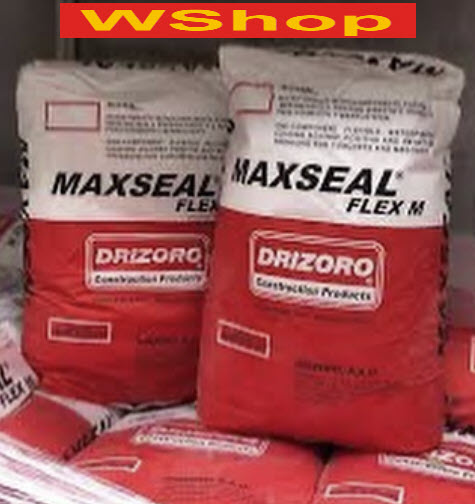
Benefits of Drizoro Maxseal Flex M Flexible Waterproofing and Protection.
12 Benefits of Drizoro Maxseal Flex M
- Protection against Insect and TERMITE ingress.
- Provides a fully flexible coating that ensures complete waterproofing even in the most severe conditions, or high negative water pressure.
- Good crack-bridging capability (> 0,5 mm). Acts as an anti-fracture membrane between the substrate and other finishing coats if applied.
- Provides an excellent barrier effect against Carbon Dioxide (CO2) and chlorine (Cl-), thereby preventing carbonation and corrosion of steel rebars.
- Allows water vapour diffusion and the breathability of the concrete.
- Resistant to abrasion and UV rays.
- Withstands atmospheric pollution, and corrosive effects of saltwater or de-icing salts.
- Excellent adhesion. Does not require a primer. Apply only to a wet surface.
- Non-toxic, suitable for contact with potable water.
- Longer lasting than other coatings, thus reducing maintenance costs.
- Environmentally friendly and suitable for application in poor ventilation areas.
- Withstands root penetration. At shore “A” hardness 85 (23mpa) is considered insect and TERMITE proof.

Maxseal FlexM is a cementitious flexible waterproofing membrane coating against positive and negative pressure. Maxseal products are a range of waterproofing and highly flexible waterproofing membranes
FAQs
1. “What is flexible waterproofing?”
Flexible waterproofing refers to the use of materials that can stretch and move without cracking or losing their waterproofing properties. Cementitious Flexible waterproofing is waterproofing that bridge small existing on a concrete substrate. This type of waterproofing is particularly useful in areas that experience movement or vibration, such as joints, cracks, and surfaces that expand and contract due to temperature changes.
Maxseal Flex cementitious flexible waterproofing membrane is one of Drizoro's' Maxseal membranes
2.”What is rubberized waterproofing?”
Rubberized waterproofing, often referred to as liquid rubber waterproofing, involves using a rubber-based coating to create a waterproof barrier. Highly flexible and durable.
Drizoro Maxiseal Flex M is not a rubberized coating
3. How do you apply flexible cementitious waterproofing?”
Applying flexible cementitious waterproofing involves several key steps to ensure a durable and effective waterproof barrier.
There is no priming just damp clean surface>
4. How do you apply flexible cementitious waterproofing?
Drizoro Maxbrush or broom. Applied in a 2 coat process.
5. Do I need to remove and clean the surface before applying drizoro maxseal flexm
Yes! Remove at least 80% of all painted surfaces
6. All that's required is a suitable clean damp surface
Use Efflorescence Rid to remove insoluble salts (called efflorescence – usually like white areas)
7. Can waterproof coating against positive andnegative
Yes. This product is designed to be used as a waterproof coating against positive andnegative water pressure ie. inside or out
What is the waterproofing method which is a flexible asphalt layer?”
Not relevant to cementitious membranes. Cementitious membranes don't adhere to asphalt.
Please contact us to learn more about 12 Benefits of Drizoro Maxseal Flex M and our other Maxseal Family. The benefits of Drizoro Maxseal Flex M can be purchased here. So make sure you purchase the Flex M to protect against future cracking. Drizoro Maxseal Flex M and be used for potable water
Other Coatings Drizoro Maxseal Flex flexible waterproofing.
11 Benefits of Drizoro Maxroad For Pavement Repair
9 Benefits Drizoro Maxseal Super – less flexible
Easy Bond Key Coat Bonding Bridge for Permanent Formwork
Ref: Wikipedia
From WA cement is a binder, a chemical substance used for construction that sets, hardens, and adheres to other materials to bind them together. Cement is seldom used on its own, but rather to bind sand and gravel (aggregate) together. Cement mixed with fine aggregate produces mortar for masonry, or with sand and gravel, produces concrete. Concrete is the most widely used material in existence and is behind only water as the planet's most-consumed resource