14 Waterproofing Myths: What Actually Works Let's be real—I've heard every waterproofing myth out there. Some contractors swear it's a complete waste of time. Others think tiles alone do all the heavy lifting. The truth? Waterproofing is essential, and understanding why separates a job that lasts decades from one that falls apart in a few years.
Why 14 Waterproofing Myths Exists in the First Place
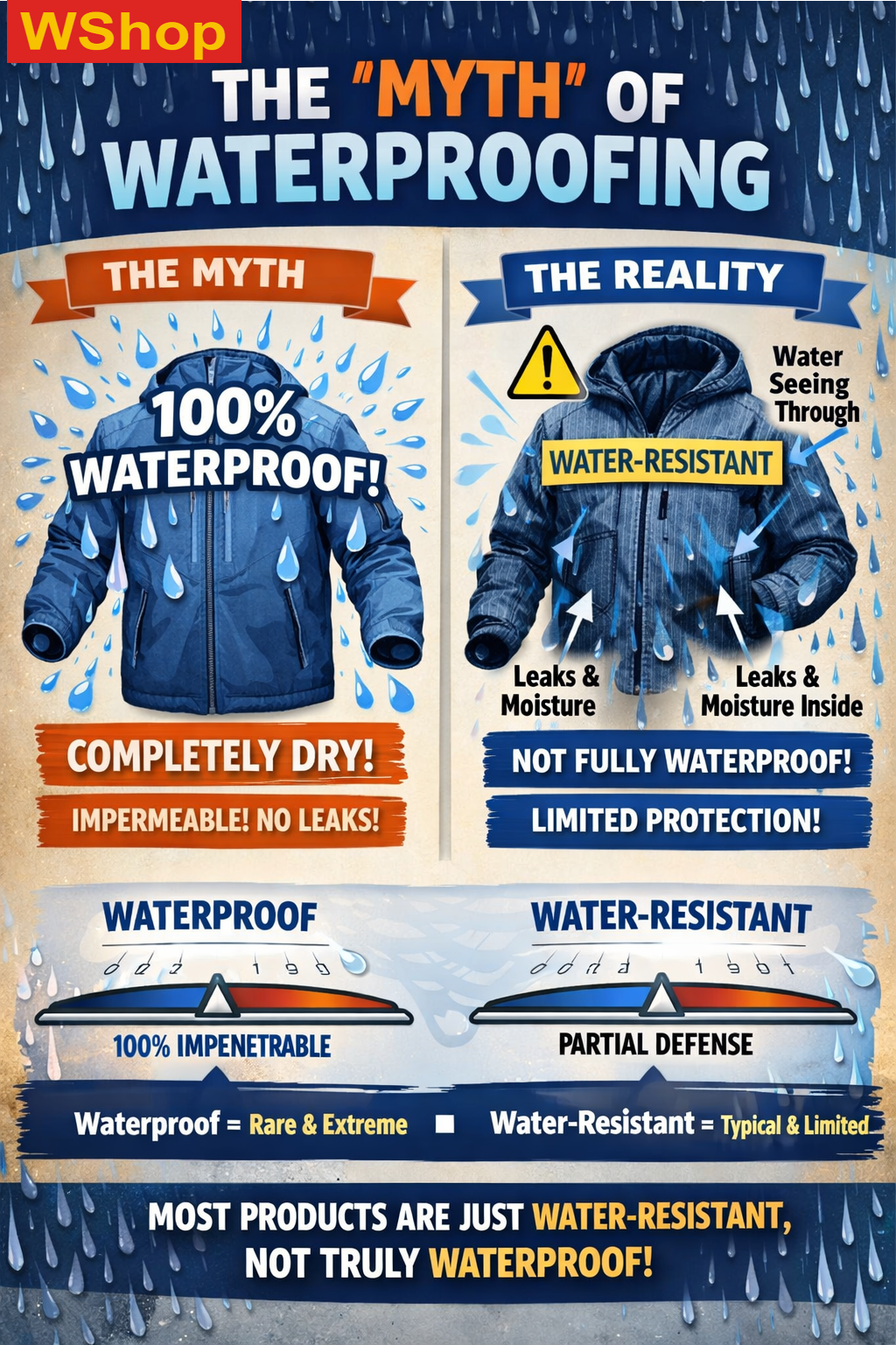
Think about paint on a wall. Paint is water-resistant, which is perfect for vertical surfaces where water runs down and drains away, and everything seems fine. So people assume that's enough protection. But that doesn't make it waterproof. Eventually, water will find its way through—especially in areas where water sits, pools, or gets trapped.
That's the key difference: Water-resistant means water takes longer to penetrate. Waterproof means water can't get through at all.
Myth 1: Grout Is Waterproof
This one comes up constantly, and I get why people believe it. Even “waterproof” grout isn't truly waterproof—it's only water-resistant in the short term.
Here's what grout is actually designed to do: accommodate movement in your tile system. Tiles expand and contract with temperature changes. That movement creates tiny cracks in the grout (called crazing and microcracking). These microscopic gaps, even in premium grout, will eventually let water through.
The bottom line: Grout keeps water from pooling on the surface, but it won't stop water penetration. That's the membrane's job.
Myth 2: Bitumen Waterproofing Is Outdated
Not necessarily. This is one of those “wrong question” situations. Just like every other waterproofing product, bitumen has its place—it just depends on what your project needs.
We don't specialize heavily in bitumen products, but that doesn't mean they're bad. The real question isn't whether a product is old or new—it's whether it's the right tool for the job. Some applications call for bitumen sheets or solvent-based solutions. Others need different products entirely.
Part of the problems with bitumens they are not born equal – I used SWEPCO that gave excellent results.
What matters: Choose based on performance and what your specific project actually requires, not based on whether something's trendy.
Myth 3: Thicker Membrane = Better Durability
This one's tricky because sometimes it's true, sometimes it's not.
If you're using a quality membrane from a reputable manufacturer, yes—applying it at the recommended thickness and going thicker will generally give you more durability. That's because these products have been tested at specific thicknesses to ensure they perform under real-world conditions.
Here's where it gets sketchy: Some manufacturers claim their product works at half a millimeter, but when you dig into their test reports, they only tested it at thicker applications. Why? Because thicker coatings take longer for water and chemicals to penetrate, so it looks durable in testing. But that's not real-world performance.
Usually using same type of membrane as the substrate will give a better result with a thicker membranes eg. cementitious membranes on masonry whether it's Hebel or Block or a slab. Part of the reason 2 coat membranes work is to better to protect crazing and pin hole formation.
The takeaway? Check the test reports. If a manufacturer recommends applying at 0.5mm but only tested at 1mm thickness, that's a red flag. Always apply membranes at the thickness specified in their technical data sheet, because that's what's actually been tested and proven to work.
Myth 4: Negative-Side Waterproofing Is Reliable
It depends on the situation. If you're waterproofing from the inside of a wall (the negative side) as your main strategy, you're taking a risk.
Here's why: The best waterproofing happens on the side where water first hits (the positive side). If that fails and you try to fix it from the negative side, you're essentially trying to seal something from behind. Any part you miss becomes the path of least resistance for water—and water always finds the easiest route.
That said, it's not completely hopeless. If negative-side waterproofing is built into your design from the start, it can work reasonably well with proper maintenance and periodic inspections. But it's not a long-term fix for a failed positive-side application.
My take away is Drizoro’s cementitious membranes are well‑known for their reliability on negative‑side waterproofing, especially in below‑grade or retaining‑wall applications. Their crystalline technology helps block water ingress even under hydrostatic pressure, which is why many contractors trust it for basements and tunnels.
Myth 5: Primer Is Optional If the Surface Is Clean
Don't believe this one. Clean isn't enough.
Yes, some manufacturers will tell you that a clean surface is all you need. But when you read their technical data sheets carefully, they usually specify that the surface needs to be prepared to a certain standard—often CSP2 or CSP3, which means grinding the surface.
Here's the real choice: You can either prime the surface (less prep work needed) other membranes or skip the primer and do more intensive surface preparation. Neither option is “optional.”
With our Drizoro Construction Products, we recommend cleaning removing efflorescence doing any repairs wash off and keep the substrate wet and apply the Drizoro Maxseal membrane of choice because they really work—no moisture issues to handles, and prevents pinholes and other defects.
Myth 6: Liquid Membranes Always Outperform Sheet Membranes
Actually, it's usually the opposite. Sheet membranes generally outperform liquid ones. The problem of course is that it all comes back to the applicators warranty
That said, technology is always improving, and we do have excellent liquid membrane options that perform really well. But when you're looking at high-performance applications, sheet membranes typically give you the best overall results. Check what your project needs rather than assuming one type is always better.
Drizoro Cementitious Membranes often will out last their warranty ( usually 10 years) and as it becomes part of your wall it may be there for ever.
Myth 7: All Membranes Can Bridge Cracks
Yes—if you're using products tested and certified for the Australian market.
Here's what's important: Membranes are tested for their ability to bridge cracks. Even our lower-performance products (Class 1) can bridge cracks of 1mm or more. Don't assume a membrane can't handle movement—check the data sheet or ask for the test results.
Going forward, there's new ISO testing that specifically includes crack-bridging requirements, so this will become even clearer.
Myth 8: Tiles Protect the Waterproofing Membrane
Absolutely—once the job is finished. Tiles provide a hard, protective layer that keeps traffic and abrasion off your membrane, which helps it last longer.
But here's the catch: During the tiling process itself, you need to be careful not to damage that membrane. Use proper technique, quality systems, and take care during installation. Once it's done and complete? Yes, those tiles are protecting your waterproofing and helping it perform for years.
In swimming pools Drizoro Maxseal Flex is often used to protect the pool shell against water movement through concrete the is tiled, pebblecreted or other finish
Myth 9: Flood Testing Proves Waterproofing Quality
It's useful, but it's not the whole story.
Flood testing is a great way to check whether a waterproofed area can hold water right now, at this moment. It's valuable for that purpose. But it doesn't tell you about the long-term physical properties of the material—how it'll handle UV, chemicals, temperature changes, or age.
Think of it this way: A flood test is like a snapshot. It shows you the system works today, but it doesn't predict how it'll perform five years from now under real conditions.
Myth 10: UV Exposure Is the Biggest Membrane Killer
It's definitely one of the biggest challenges, especially for exposed rooftops and outdoor areas.
Not all membranes are created equal when it comes to sun exposure. Some need to be covered within 5-8 days of application to protect them from UV damage. Others have UV stabilizers built in and can handle years of exposure. Even when the are covered erosion of the cover e.g. in a garden bed can cuase the membrane to be exposed
What you need to do: Check your product's technical data sheet. Understand how long you can leave it exposed based on:
- How much sun it gets
- Which direction it faces
- Whether it's shaded
- Your local climate
Some products need protection no matter what. Others are built to stay exposed for the life of the project. Always plan ahead rather than guessing.
With Drizoro Construction Products because they are cement based UV is not an issue.
Myth 11: Crystalline Waterproofing Can Replace Membranes
In most cases, no—not for internal or external wet areas.
Crystalline products do have a place in the market, and they can help control water entry in certain applications. But if you're following standard building codes (the most common design pathways), you need a proper membrane, not just crystalline waterproofing.
These products work, but they're not a substitute for the full protection a membrane provides.
CMA ADMIX Crystalline Capillary Waterproofing Admixture permanent, crystalline capillary waterproofing admixture. When added to concrete or mortar, insoluble crystals are formed and developed in the water bearing capillaries of the mix. This effectively blocks the passage of water ensuring permanent water tightness for the life of the structure.
Myth 12: Concrete Is Naturally Waterproof
Concrete is water-resistant, never but even that's not the same as waterproof.
Here's the difference: Concrete can resist water and can actually sit underwater indefinitely. But that doesn't mean water can't enter it. Once water gets in, it moves around uncontrolled inside the concrete—and that defeats the whole purpose of waterproofing.
Must concrete would struggle to be water resistant and for longevity should be protected
That's why we use topical coatings and sheet membranes—to make concrete truly impervious and to handle the natural cracking and movement that occurs over time.
Myth 13: Pinholes Are Inevitable in Liquid Waterproofing
Yes, they can happen—but they're not inevitable if conditions are right.
Pinholes occur when air gets trapped in the coating as it dries. This happens most often when you go from warm to cool conditions during application. If conditions are stable and you're applying during the right time of day, pinholes are much less likely.
Effective preparation helps to prevent this. So while pinholes are inherent to liquid coatings, they're not unavoidable—it depends on conditions and technique.
Usually, this is the reason 2 separate coatings are applied when using cementitious membrane.
Myth 14: Waterproofing Failures Are Always Installation Errors
Okay, this one has two sides.
From the manufacturer's side: If there's a batch failure during production, that's 100% our fault. That's why quality control exists—to catch those errors before products leave the plant.
From the field: Most failures that happen on-site are linked to installation factors. But here's the important part—that doesn't always mean the installer did something wrong. There are so many variables out there:
- Substrate conditions
- Weather during application
- Construction quality
- Damage from other trades
- Site conditions beyond anyone's control
Sometimes failures happen because of factors the installer can't control. So when we talk about installation errors, let's be fair—sometimes the “error” isn't really an error at all.
The Real Takeaway
Waterproofing isn't complicated, but it does matter. The 14 Waterproofing Myths persist because tiles and grout do a decent job at first glance. But long-term durability, protection against the elements, and building code compliance all depend on proper waterproofing.
Whether you're a DIYer tackling a bathroom renovation or a contractor managing multiple projects, the principles are the same:
- Choose the right product for your specific application
- Follow the technical data sheet exactly—thickness, primers, conditions, and all
- Check test reports before you buy
- Understand your substrate and climate
- Plan for protection (especially with UV exposure)
- Take care during installation to avoid damaging the membrane
- Most importantly talk to the supplier – simply give us a call or send an email we will endeavor to get back to you ASAP
The best waterproofing is the one that's been properly designed, applied correctly, and maintained well. Do it right the first time, and you're giving yourself years of trouble-free performance.
Have you run into other waterproofing myths on your projects? We'd love to hear what else is floating around out there—it might be the topic of our next guide.
14 Waterproofing Myths: What Actually Works check out the video below even more how Drizoro Construction Product can help myths about basement waterproofing debunking.
Now you have an idea how Drizoro Construction Products are related to the 14 Waterproofing Myths: What Actually Works
Ref: https://en.wikipedia.org/wiki/Waterproofing
Waterproofing is the process of making an object, person or structure water-resistant so that it remains relatively unaffected by water or resists the ingress of water under specified conditions. Such items may be used in wet environments or underwater to specified depths.
Common myths about basement waterproofing