4 Types of Trafficable Membranes
What are the best 4 types of Trafficable Membranes available today?
We need to first define what a trafficable is. Trafficable means “it can be travelled upon”. Membranes bearing traffic must withstand the movement of people on a regular basis.
Examples of this would be on a rooftop slab, podium slabs where people are moving around consistently enjoying the facilities of the building.
The best trafficable coatings will be able to handle the movement of regular traffic, vehicular on a bridge, wharf, car parks, commercial warehouses or other roadways.
The membrane should be waterproof and ideally withstand hydrostatic pressure. Be UV and slip-resistant. The trafficable coating system is specifically designed. They waterproof concrete slabs and protect working areas underneath from water damage.
Where the membrane can't withstand hydrostatic pressure, a puncture in the membrane could be the beginning of the end for the membrane.
Water would enter the puncture and cause the delamination of the rest of the membrane.
1. Cementitious Trafficable Membranes
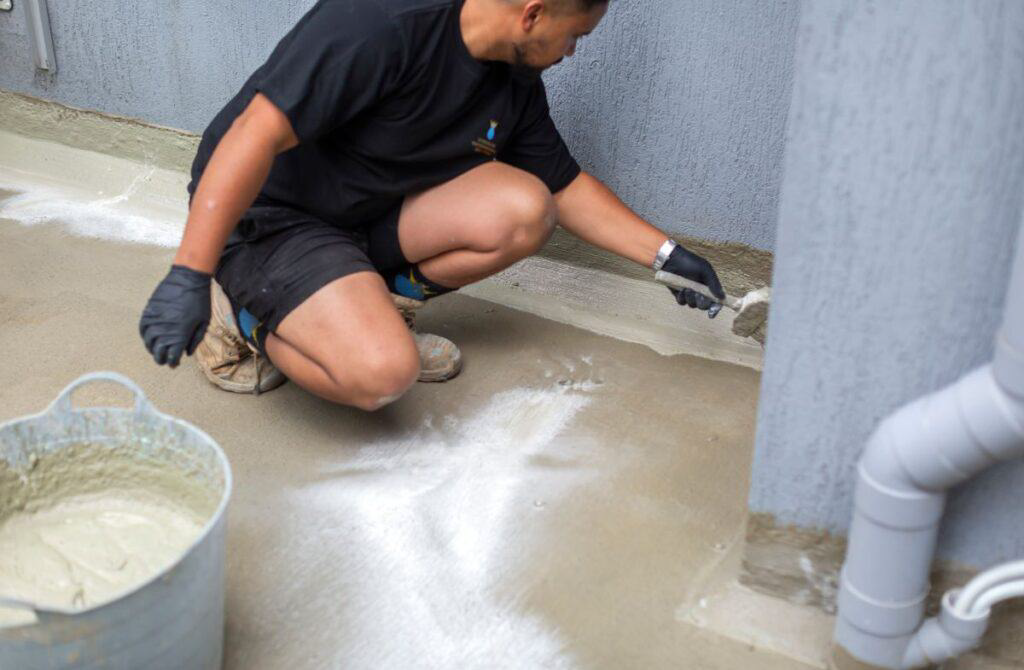
Cementitious membranes have similar properties to concrete slabs. They are easy to use. NO PRIMER required. Damp the concrete surface. Apply. The water acts as a carrier of the cementitious coating. This means the coating follows the dampness into the concrete slab. The cement nature of the coating means that it will then lock into the concrete slab..
Maxseal Traffic has been designed by Drizoro Construction Products, especially for this purpose. You can watch the Maxseal Traffic below or watch on YouTube video here>>>
2. Trafficable Acrylic Membranes
Acrylics are used in many situations. They are not usually suitable if hydrostatic pressure is expected.
3. Polyurethanes
Polyurethane waterproofing membranes are used indoor and outdoor alike. Used terraces, roofs, wet areas and retaining walls. Used extensively as trafficable surface
May require a primer coat and a top coat to protect against UV rays.
4. Bituminous
Pavement sealers to protect concrete or bitumen pavements against water penetrations and other chemicals such as oil, fuel and more.
Swepco Pavron Video below This product is no longer available.

Drizoro Maxseal Traffic
- trafficable deck membrane.
- trafficable membrane waterproofing
used for basement floors, driveways, parking garages, roofs and more - seals water from both sides
- Ideal for commercial traffic and heavy loads
Other membranes which are not trafficable can be often used to stop hydrostatic pressure. Process involves installing a suitable cementitious membrane such as Drizoro Maxseal Flex.

Leave a Reply
You must be logged in to post a comment.

3 thoughts on “4 Types of Trafficable Membranes”
Martin Bonner
May 3, 2020 at 12:59 amHi , we have a concrete pool that would normally have a liner in it . We were wondering if your waterproofing membrane could be used instead .
The pool hasn’t been used for 15 years , as a result the liner is currently damaged and most of the water has been evaporated out or pumped out .
Looking for options
Waterproof Shop Team
May 3, 2020 at 7:47 amGood Morning Martin
Thanks for your comment
The product below are part of the Drizoro System for waterproofing concrete pools
MAXSEAL FLEX | MAXPLUG | MAXREST | MAXRITE 700 | MAXMESH | MAXJOINT ELASTIC for Expansion Joints and moving cracks
To learn more please go to the link below
Swimming Pools Waterproofing >>>
Thanks for leaving your comment
Waterproofing Shop Team
watprosh
February 28, 2023 at 10:31 amHi Martin
Thanks for your inquiry via comments on our website Please check out the link below
Swimming Pools Waterproofing >>>
Usually pool shells are waterproofed using 2 coats of Drizoro Maxseal Flex to waterproof the shell
Then CONCRESEAL® PLASTERING-M for waterproofing, leveling, protection and decoration of concrete and masonry,
in one single layer with thickness between 3 and 5 mm.
Learn more go to the link below
https://onlinewaterproofingshop.com/product/concreseal-plastering-m/
Estimated consumption of CONCRESEAL® PLASTERING-M is 1,7 kg/m²/mm.
This figure is for guidance only and may vary depending on porosity, texture, substrate conditions and application method
Therefore to achieve 2 mm /m² you will require approximately 3.4 Kgs per m²
Martin I hope this answers your inquiry. If I have missed anything please drop us line or call 0466 797900